Inside China’s push to apply AI across its energy system
Under China’s push to clean up its energy system, AI is starting to shape how power is produced, moved, and used — not in abstract policy terms, but in day-to-day operations.
In Chifeng, a city in northern China, a renewable-powered factory offers a clear example. The site produces hydrogen and ammonia using electricity generated entirely from nearby wind and solar farms. Unlike traditional plants connected to the wider grid, this facility runs on its own closed system. That setup brings a problem as well as a benefit: renewable power is clean, but it rises and falls with the weather.
To keep production stable, the factory relies on an AI-driven control system built by its owner, Envision. Rather than following fixed schedules, the software continuously adjusts output based on changes in wind and sunlight. As reported by Reuters, Zhang Jian, Envision’s chief engineer for hydrogen energy, compared the system to a conductor, coordinating electricity supply and industrial demand in real time.
When wind speeds increase, production ramps up automatically to take full advantage of the available power. When conditions weaken, electricity use is quickly reduced to avoid strain. Zhang said the system allows the plant to operate at high efficiency despite the volatility of renewable energy.

Projects like this are central to China’s plans for hydrogen and ammonia, fuels seen as important for cutting emissions in sectors such as steelmaking and shipping. They also point to a broader strategy: using AI to manage complexity as the country adds more renewable power to its grid.
Researchers argue that AI could play a significant role in meeting China’s climate goals. Zheng Saina, an associate professor at Southeast University in Nanjing who studies low-carbon transitions, said AI can support tasks ranging from emissions tracking to forecasting electricity supply and demand. At the same time, she cautioned that AI itself is driving rapid growth in power consumption, particularly through energy-hungry data centres.
China now installs more wind and solar capacity than any other country, but absorbing that power efficiently remains a challenge. According to Cory Combs, associate director at Beijing-based research firm Trivium China, AI is increasingly seen as a way to make the grid more flexible and responsive.
That thinking was formalised in September, when Beijing introduced an “AI+ energy” strategy. The plan calls for deeper links between AI systems and the energy sector, including the development of multiple large AI models focused on grid operations, power generation, and industrial use. By 2027, the government aims to roll out dozens of pilot projects and test AI across more than 100 use cases. Within another three years, officials want China to reach what they describe as a world-leading level of AI integration in energy.
Combs said the focus is on highly specialised tools designed for specific jobs, such as managing wind farms, nuclear plants, or grid balancing, rather than general-purpose AI. This approach contrasts with the United States, where much of the investment has gone into building advanced large-language models, according to Hu Guangzhou, a professor at the China Europe International Business School in Shanghai.
One area where AI could have immediate impact is demand forecasting. Fang Lurui, an assistant professor at Xi’an Jiaotong-Liverpool University, said power grids must match supply and demand at every moment to avoid outages. Accurate forecasts of renewable output and electricity use allow operators to plan ahead, storing energy in batteries when needed and reducing reliance on coal-fired backup plants.
Some cities are already experimenting. Shanghai has launched a citywide virtual power plant that links dozens of operators — including data centres, building systems, and electric vehicle chargers — into a single coordinated network. During a trial last August, the system reduced peak demand by more than 160 megawatts, roughly equivalent to the output of a small coal plant.
Combs said such systems matter because modern power generation is increasingly scattered and intermittent. “You need something very robust that is able to be predictive and account for new information very quickly,” he said.
Beyond the grid, China is also looking to apply AI to its national carbon market, which covers more than 3,000 companies in emissions-heavy industries such as power, steel, cement, and aluminium. These sectors together produce over 60% of the country’s carbon emissions. Chen Zhibin, a senior manager at Berlin-based think tank adelphi, said AI could help regulators verify emissions data, refine the allocation of free allowances, and give companies clearer insight into their production costs.
Still, the risks are growing alongside the opportunities. Studies suggest that by 2030, China’s AI data centres could consume more than 1,000 terawatt-hours of electricity each year — roughly the same as Japan’s current annual usage. Lifecycle emissions from the AI sector are projected to rise sharply and peak well after China’s 2030 emissions target.
Xiong Qiyang, a doctoral researcher at Renmin University of China who worked on one such study, said the results reflect the reality that coal still dominates China’s power mix. He warned that rapid AI expansion could complicate national climate goals if energy sources do not shift quickly enough.
In response, regulators have begun tightening rules. A 2024 action plan requires data centres to improve energy efficiency and increase their use of renewable power by 10% each year. Other initiatives encourage new facilities to be built in western regions, where wind and solar resources are more abundant.
Operators on the east coast are also testing new ideas. Near Shanghai, an underwater data centre is set to open, using seawater for cooling to cut energy and water use. The developer, Hailanyun, said the facility will draw most of its power from an offshore wind farm and could be replicated if the project proves viable.
Despite the growing energy demands of AI, Xiong argued that its overall impact on emissions could still be positive if applied carefully. Used to optimise heavy industry, power systems, and carbon markets, he said, AI may remain an essential part of China’s effort to cut emissions — even as it creates new pressures that policymakers must manage.
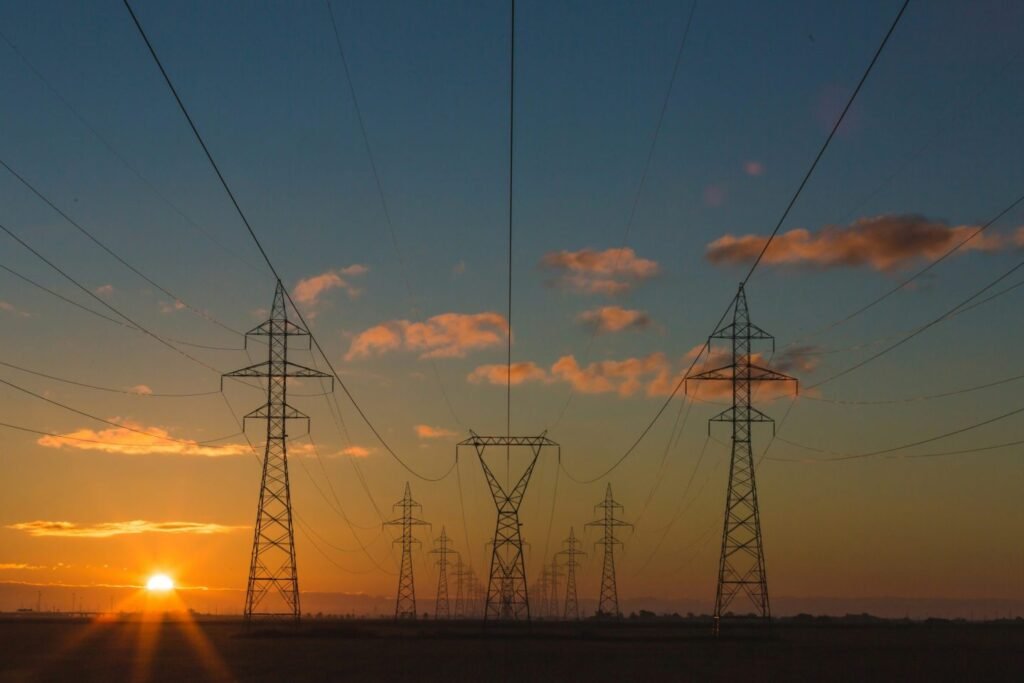
(Photo by Matthew Henry)
See also: Can China’s chip stacking strategy really challenge Nvidia’s AI dominance?
Want to learn more about AI and big data from industry leaders? Check out AI & Big Data Expo taking place in Amsterdam, California, and London. The comprehensive event is part of TechEx and is co-located with other leading technology events, click here for more information.
AI News is powered by TechForge Media. Explore other upcoming enterprise technology events and webinars here.